RELATIONSHIP TO PATHOLOGY DEPARTMENT
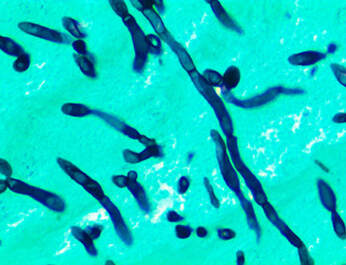 Candida hyphae, pseudohyphae and budding yeast in heart valve
Relationship to Pathology Residency Program
The fellowship program is integrated within the greater Beth Israel Deaconess Medical Center Department of Pathology post-graduate educational programs. Fellows will interact extensively with our pathology residents and assist in the training of residents rotating through the microbiology laboratory. Interaction is fostered by fellows and residents having desk space and computer access in a common room. Both fellows and residents form part of the clinical microbiology team and together work-up consults, prepare plate rounds, and attend daily rounds.
Participation in Pathology Department
Fellows will interact with the greater Pathology Department through service work, teaching, and academic activities. The academic life in the pathology department at Beth Israel Deaconess Medical Center is rich. Fellows will participate in clinical pathology and pathology-wide didactic conferences including the clinical pathology case conference and surgical pathology slide conference where they will be discussants for cases involving histopathological identification of micro-organisms. Fellows will a carry a pager and be available for consultation from other clinical pathology and anatomic pathology services.
The fellowship program is integrated within the greater Beth Israel Deaconess Medical Center Department of Pathology post-graduate educational programs. Fellows will interact extensively with our pathology residents and assist in the training of residents rotating through the microbiology laboratory. Interaction is fostered by fellows and residents having desk space and computer access in a common room. Both fellows and residents form part of the clinical microbiology team and together work-up consults, prepare plate rounds, and attend daily rounds.
Participation in Pathology Department
Fellows will interact with the greater Pathology Department through service work, teaching, and academic activities. The academic life in the pathology department at Beth Israel Deaconess Medical Center is rich. Fellows will participate in clinical pathology and pathology-wide didactic conferences including the clinical pathology case conference and surgical pathology slide conference where they will be discussants for cases involving histopathological identification of micro-organisms. Fellows will a carry a pager and be available for consultation from other clinical pathology and anatomic pathology services.